Concrete vs. Pavers: The Core Differences
When planning a new driveway or patio project in Rockford, one of the first decisions you'll face is whether to go with concrete or pavers. Both materials have earned their place in residential construction, but they offer distinctly different benefits and trade-offs. Understanding these differences is essential before you commit time and money to your project.
Concrete Driveways are poured as a single, monolithic slab, creating a smooth, uniform surface that's been a popular choice for decades. Pavers, on the other hand, are individual units (typically made from stone, brick, or concrete) laid out in patterns across your outdoor space. This fundamental difference in installation method leads to variations in appearance, durability, maintenance requirements, and long-term value. Your choice ultimately depends on your budget, aesthetic preferences, climate considerations, and how much upkeep you're willing to handle.
Durability and Longevity: Which Lasts Longer
Concrete has a well-earned reputation for longevity when properly installed and maintained. A quality concrete driveway can easily last 25 to 30 years, and some well-maintained slabs have surpassed 40 years of service. The key factor is proper installation, adequate base preparation, and climate-appropriate finishing. In Rockford's climate, where freeze-thaw cycles are common during winter months, concrete that's air-entrained and sealed performs exceptionally well.
Pavers also offer impressive durability, typically lasting 25 to 50 years depending on the material quality and installation craftsmanship. However, pavers require more active maintenance over their lifetime. Individual units can shift, crack, or become loose, especially under heavy traffic or in areas prone to settling. When damage occurs, you can replace individual pavers without disturbing the entire surface, which is an advantage concrete can't offer. If you need to access utilities beneath your driveway, pavers are far easier to work with than cutting through concrete.
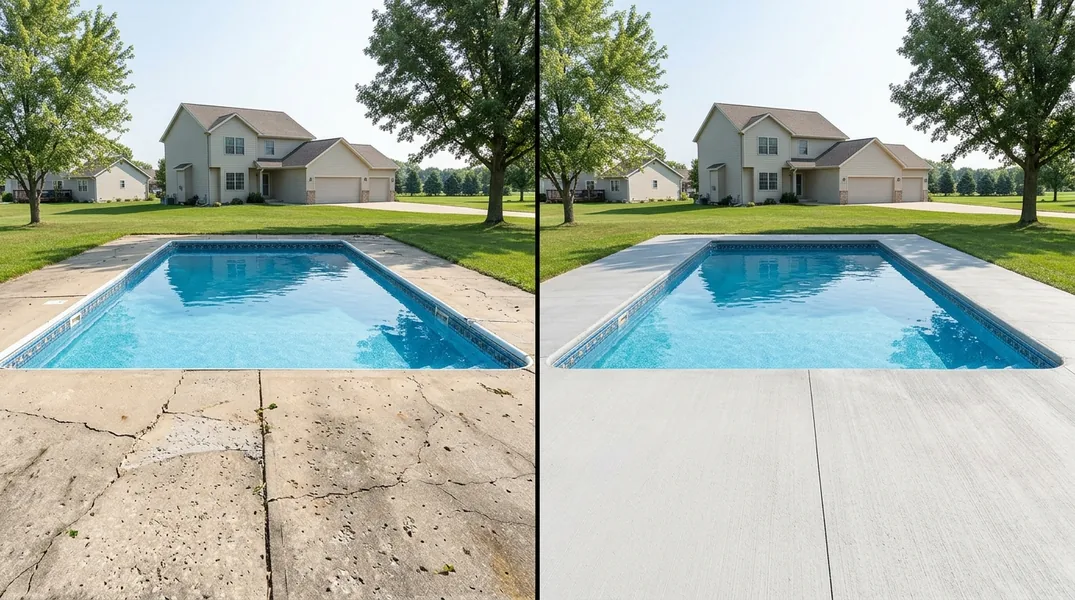
Both materials can develop cracks and surface issues over time, but the nature of these problems differs. Concrete typically cracks in predictable patterns as it ages, while pavers may develop uneven spots as the base shifts. This is where Concrete Repair & Resurfacing becomes important for concrete owners, whereas paver owners may need to reset or replace individual units.
Maintenance Requirements and Long-Term Care
Concrete requires relatively minimal maintenance compared to pavers, which is one reason many homeowners prefer it. A concrete driveway or patio needs periodic sealing (typically every 2 to 3 years), regular sweeping to remove debris, and prompt attention to any spills that could stain the surface. Snow and ice removal in winter is straightforward, though salt can gradually damage concrete if not sealed properly. Most concrete owners find that basic cleaning and occasional sealing keep their investment looking good for decades.
Pavers demand more hands-on care. The joints between pavers can accumulate dirt, sand, and weeds over time, requiring regular sweeping and occasional pressure washing. You'll need to re-sand the joints periodically to maintain structural integrity and prevent weeds from taking hold. Moss and algae can develop in shaded areas, particularly in Loves Park where humidity levels can be higher. Additionally, pavers may shift due to ground settling or freeze-thaw cycles, requiring you to reset individual units or call a professional. While this modularity is an advantage when repairs are needed, it also means more ongoing attention is required to keep everything level and stable.
If you're seeking low-maintenance durability, concrete is the clear winner. If you enjoy maintaining your outdoor spaces and appreciate the ability to replace individual damaged units, pavers might appeal to you more. Consider your lifestyle and how much time you're willing to dedicate to upkeep when making your decision.
Aesthetic Options: Design and Customization
One area where pavers shine is visual variety and design flexibility. With pavers, you can create intricate patterns, mix colors and materials, and achieve a custom look that's truly unique to your home. Whether you prefer the rustic charm of natural stone, the classic appeal of brick, or the modern precision of concrete pavers in various hues, the design possibilities are extensive. Stamped & Decorative Concrete has evolved significantly, but pavers still offer unmatched pattern versatility and the ability to change your design vision after installation if individual pavers fail or wear unevenly.
Concrete shouldn't be dismissed for aesthetics, though. Modern concrete finishing techniques allow for stamped patterns, colored concrete, exposed aggregate finishes, and polished surfaces that rival pavers in visual appeal. Stamped concrete can replicate the look of stone, brick, or tile at a fraction of the cost. You can also add decorative borders, custom scoring, or even artistic designs during installation. The advantage of concrete is that you get a cohesive, unified appearance without the grout lines that can look dated or require constant maintenance.
Your choice here depends on whether you want maximum design flexibility (pavers) or a more streamlined, modern aesthetic with lower ongoing visual maintenance (concrete). Both can be beautiful when professionally installed, so visit local homes in your neighborhood to see examples of each material in person.
Concrete Driveway and Patio Cost in Rockford: What to Budget
Cost is often the deciding factor for homeowners, and both materials represent significant investments. Generally, concrete is the more economical choice upfront. Basic concrete driveways and Concrete Patios typically cost less per square foot than paver installation, especially when you're looking at simple, undecorated finishes. However, decorative concrete options like stamping or staining can narrow the price gap considerably.
Pavers usually carry a higher initial cost due to the labor-intensive installation process and the material cost of individual units. However, when you factor in the ability to replace damaged pavers without replacing your entire surface, some homeowners view this as better long-term value. The true cost difference becomes clearer when you consider maintenance over 20 to 30 years. Concrete's lower maintenance requirements mean fewer dollars spent on sealing, cleaning, and repairs, while pavers may require periodic re-sanding, resetting, and unit replacement.
For accurate pricing tailored to your specific project, size, location, and finish preferences, contact Rockford Concrete directly at (815) 668-8612 or request a free estimate. Our team can provide detailed cost comparisons for both concrete and paver options, helping you make an informed decision that aligns with your budget and long-term goals.
Climate Considerations for Rockford Homeowners
Living in Rockford means dealing with significant seasonal temperature swings, freeze-thaw cycles, and occasional heavy snow and ice. These climate factors should influence your material choice. Concrete, when properly sealed and air-entrained, handles freeze-thaw cycles very well. The air pockets in the concrete allow water to expand without causing damage. However, de-icing salts can gradually deteriorate concrete surfaces, making regular sealing essential in our climate.
Pavers also perform adequately in Rockford's climate, but they can shift more noticeably as the ground freezes and thaws. The base material beneath pavers can settle unevenly after winter, causing some units to become uneven or loose. This is particularly true in areas with poor drainage or heavy clay soil. If you choose pavers, ensure your installer uses a proper gravel base and implements excellent drainage to minimize frost-related movement. Both materials are viable in our region, but concrete's monolithic structure makes it slightly more resistant to the specific challenges of Illinois winters.
Looking for a professional concrete contractor in Rockford? Rockford Concrete responds fast for all your concrete needs.
Get a Free QuoteOur services: Concrete Driveways · Concrete Patios · Stamped & Decorative Concrete