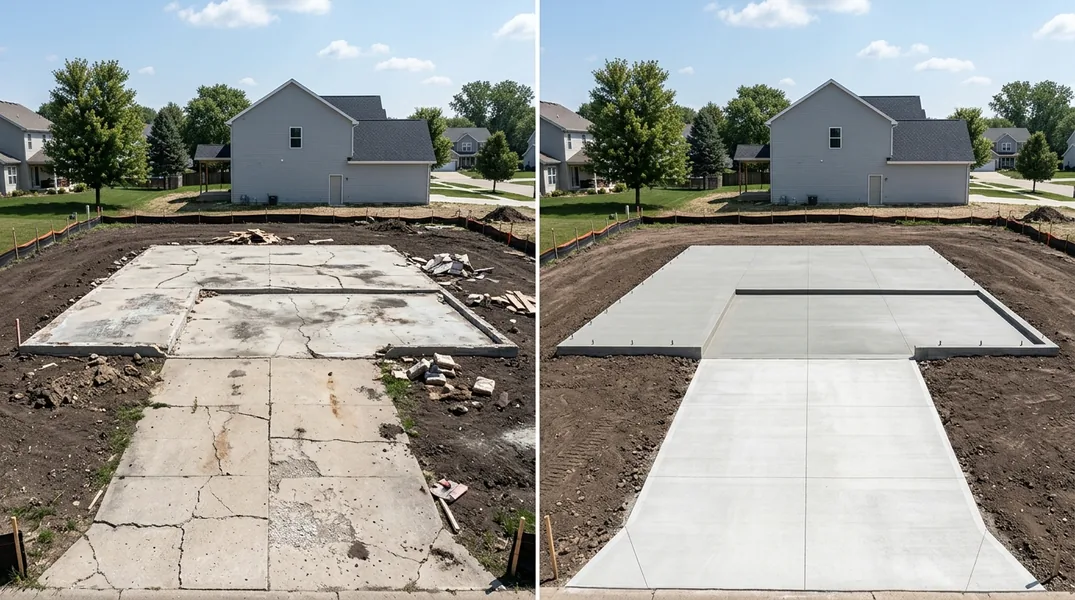
Understanding New Construction Concrete Slabs in Rockford
Buying a new construction home is exciting, but it also requires careful attention to details that many first-time homebuyers overlook. One of the most critical components of any new home is the concrete slab foundation. Whether your Rockford area home sits on a traditional basement, crawl space, or slab-on-grade foundation, the quality and integrity of the concrete work will affect your home's durability and resale value for decades to come.
A concrete slab serves as the base for your entire structure. It's not just about aesthetics or the smoothness of your garage floor. The slab must be properly installed, correctly finished, and built to withstand the climate and soil conditions specific to northern Illinois. Many homebuyers assume that if the slab looks clean and level when they walk through the property, everything is fine. In reality, there are numerous hidden factors and technical specifications that require professional evaluation before you sign the closing documents.
What to Look for During Your Builder Foundation Inspection
A builder foundation inspection is one of the most important steps in the new home purchase process. This inspection goes far beyond a casual walk-through. A qualified inspector will examine the concrete slab for cracks, settling issues, proper slope for drainage, and overall structural integrity. Before closing, you have the right and responsibility to verify that the foundation meets building codes and the specifications outlined in your purchase agreement.
Start by looking at the slab surface itself. Small hairline cracks are often normal and expected in concrete as it cures, but larger cracks, especially those wider than one-eighth of an inch or cracks that show signs of movement, warrant further investigation. Check for areas where the slab appears to be settling unevenly, which could indicate improper base preparation or soil issues. Pay attention to the perimeter where the slab meets the foundation walls. Look for gaps, separation, or water damage signs. Water intrusion at the slab edge is a common problem that can lead to expensive repairs down the road. Additionally, verify that the slab has proper slope toward drainage areas and away from the structure. Poor drainage can cause pooling water, which accelerates concrete deterioration and creates moisture problems in your home.
Don't hesitate to hire a professional structural engineer or experienced home inspector if you have concerns. The cost of a thorough inspection now is minimal compared to the expense of addressing foundation problems after closing. Many builders welcome professional inspections because it demonstrates due diligence on both sides.
Frost Depth and Concrete Foundation Requirements for Rockford, Illinois
One of the most important technical specifications for new home slabs in Rockford is frost depth. Frost depth refers to the maximum depth that the ground freezes during winter. In northern Illinois, the frost depth is typically 42 inches below grade. This measurement is critical because concrete foundations and footings must extend below the frost line to prevent frost heave, a phenomenon where frozen soil expands and contracts, causing the foundation to shift and crack.
If a builder constructs a foundation or slab that doesn't account for the proper frost depth, you're looking at potential structural problems within a few years. Frost heave can cause uneven settling, cracks in the foundation, and even structural failure in severe cases. When reviewing your new construction documents and during your pre-closing walkthrough, verify that the builder has followed the International Building Code (IBC) and local Rockford building codes regarding frost depth requirements. Ask your builder or inspector to confirm that all footings and foundation elements extend to the required depth.
This is especially important if your new home is located in areas with challenging soil conditions or if the property has a history of drainage issues. The concrete slab itself may be on grade, but the perimeter footings and any basement walls must extend below the frost line. Don't assume the builder knows or has followed these requirements without verification. It's a simple check that can save you from costly repairs and structural headaches in the future.
Concrete Quality, Finishing, and Durability Standards
The quality of the concrete mix and the finishing work directly impact how well your slab will perform over time. Concrete is not just concrete. The strength, durability, and longevity depend on the water-to-cement ratio, the quality of aggregates used, air entrainment (tiny air bubbles that help concrete withstand freeze-thaw cycles), and proper curing time. In the Rockford climate, where winters are cold and salt is often applied to driveways and parking areas, air-entrained concrete is essential.
During your pre-closing inspection, ask the builder for documentation of the concrete specifications, including the PSI (pounds per square inch) rating and whether the concrete was air-entrained. Standard concrete for residential slabs is typically 3,000 to 4,000 PSI, but in areas prone to freezing and thawing, higher strength and air entrainment are recommended. The slab surface should be smooth, level, and free of major voids or spalling (flaking). Check that control joints have been properly cut into the slab to direct where cracks will occur, rather than allowing random cracking. These joints should be spaced appropriately, typically every 4 to 6 feet for interior slabs.
If you're concerned about the long-term durability of your concrete slab, consider applying a sealer after closing. A quality sealer protects the concrete from moisture penetration, salt damage, and UV degradation. Many homeowners don't realize that a simple sealing maintenance step can extend the life of their concrete significantly. If you need professional guidance on maintaining your new concrete surfaces, Rockford Concrete can provide recommendations tailored to your specific situation.
Common Red Flags and When to Request Repairs Before Closing
Certain issues discovered during your pre-closing inspection should be treated as deal-breakers or require written commitments from the builder for repair. Large cracks, areas of spalling or deterioration, significant unevenness in the slab, or evidence of water intrusion are all red flags that suggest improper installation or material defects. If you notice these issues, do not close on the property until the builder has either repaired the problem or provided a substantial credit toward future repairs.
Another red flag is evidence of settling or movement in the foundation. If one area of the slab appears noticeably higher or lower than adjacent areas, this could indicate soil settlement or inadequate base preparation. Similarly, if you see cracks that appear to follow a pattern or show signs of active movement, this warrants professional structural evaluation before you take ownership of the property.
Water staining, efflorescence (white powdery deposits on the concrete), or visible moisture damage around the perimeter of the slab are also concerning. These signs suggest that water is moving through or around the concrete, which can compromise the integrity of the structure and create problems for your basement or crawl space. Don't accept vague assurances from the builder that these issues will resolve on their own. Get everything documented and request specific remediation steps or credits.
Next Steps: Get a Professional Evaluation Before Closing
The best protection for your investment is a thorough, professional evaluation of your new construction slab before closing. Hire a qualified home inspector or structural engineer who has experience with new construction in northern Illinois. They will understand the specific requirements for the Rockford climate and local building codes. The cost of this inspection, typically between 300 and 600 dollars, is a small price compared to the potential cost of addressing foundation problems after you own the home.
If you have questions about concrete quality, durability, or maintenance after closing, the team at Rockford Concrete is here to help. Whether you're considering Concrete Driveways, Concrete Patios, or other concrete work around your new home, we bring professional expertise and local knowledge. Contact us at (815) 668-8612 or visit our website to request a free estimate for any concrete projects on your new property. We serve Rockford, Loves Park, Machesney Park, Belvidere, and surrounding areas with quality concrete solutions backed by years of experience.
Don't let foundation concerns derail your excitement about your new home. Take the time to inspect, ask questions, and verify that everything meets code and quality standards. Your diligence now will pay dividends in the form of a structurally sound, durable home for years to come.
Looking for a professional concrete contractor in Rockford? Rockford Concrete responds fast for all your concrete needs.
Get a Free QuoteOur services: Concrete Driveways · Concrete Patios · Stamped & Decorative Concrete